SEO

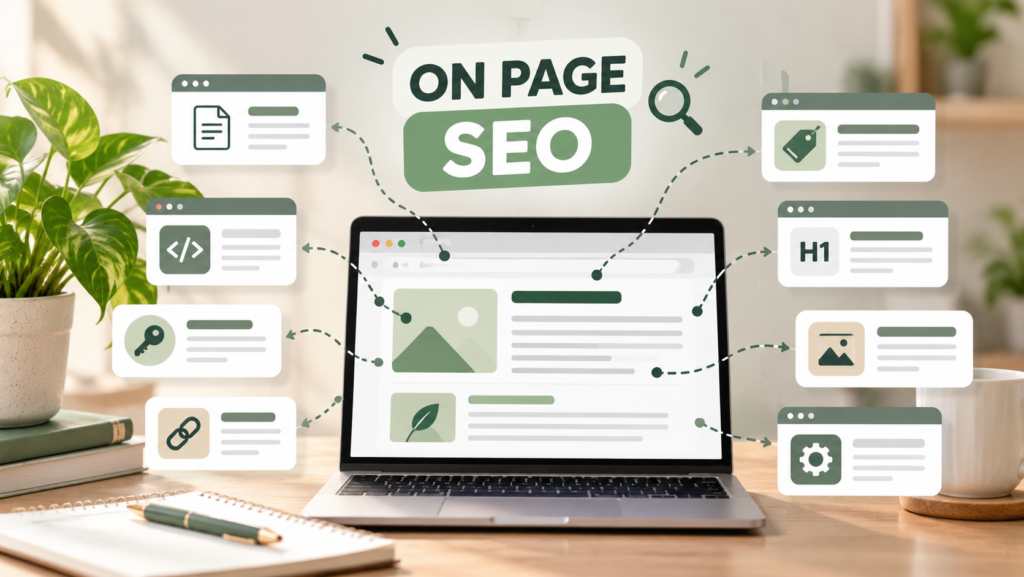
on page seo workspace infographic

On-Page SEO Checklist: 10 Ways to Optimize Your Website

What is On-Page SEO and Why Does It Does? Creating a website is an important step toward growing your business online, but having a website alone does not guarantee that people will find it through Google. Your pages need useful content, clear information, and a structure that helps both visitors and search engines understand what you offer. This is where on-page SEO becomes important. An on-page SEO checklist helps you review the essential elements of your website and identify opportunities for improvement. From keyword research and title tags to image optimization and internal linking, these practices can make your website more informative, accessible, and easier to navigate. Whether you run a small business, manage a blog, or offer freelance services, you can use this guide to learn how to optimize your website for SEO, even if you are a beginner. By the end of this article, you will have ten practical steps to improve your website, examples you can follow, and a checklist you can use whenever you publish a new page or blog post. What Is On-Page SEO? On-page SEO is the process of optimizing individual website pages and their content to help search engines understand them and provide a better experience for visitors. It includes elements such as page titles, headings, content, images, URLs, and internal links. For example, imagine you offer website design services to small businesses. Instead of using a vague page title such as “Our Services,” you could use “Website Design Services for Small Businesses.” A descriptive title helps communicate what the page offers and may be more relevant to people searching for that service. On-page SEO is related to two other areas of SEO: Off-page SEO: Activities outside your website, such as earning relevant backlinks and building your online reputation. Technical SEO: Improvements that help search engines crawl, access, and index your website, including sitemap configuration and resolving technical issues. These areas can overlap in practice, but each has a different focus. The goal of on-page SEO is not simply to add keywords. It is to create useful pages that clearly answer visitors’ questions and make your website easier to understand. On-Page SEO Checklist: 10 Ways to Optimize Your Website Use the following ten techniques to review your website and improve its on-page SEO. 1. Conduct Keyword Research Keyword research is the process of discovering the words and phrases people use when searching for information, products, or services online. Before writing a page, identify its main topic and the search queries it should address. Choose keywords that are relevant to your business and match what your audience wants to find. Why it matters: Keyword research helps you understand your audience’s needs and plan content around relevant searches. How to do it: Write down the products, services, or topics related to your page. Use tools such as Google Keyword Planner and Google Trends to explore keyword ideas. Review search intent to understand what users expect from the results. Select one primary keyword and a few closely related terms. Include these terms naturally where they make sense. Example: For a freelance digital marketing website, a primary keyword could be “on-page SEO checklist.” Related phrases might include “on-page SEO techniques” and “website SEO checklist.” Avoid targeting unrelated keywords or repeating the same phrase excessively. Search volume and keyword difficulty should be evaluated with actual tool data rather than guessed. Your action: [ ] Choose a relevant primary keyword and identify related search terms for each important page. 2. Optimize Your SEO Title Tag A title tag is an HTML element that describes the title of a webpage. Search engines may use it to generate the clickable title shown in search results. A good title should be clear, unique, descriptive, and relevant to the page. Why it matters: A descriptive title helps search engines understand the page topic and helps potential visitors decide whether the result matches their needs. How to do it: Include your main keyword naturally when appropriate. Describe the page accurately. Make important pages’ titles unique. Avoid unnecessary repetition and vague wording. Keep the title concise enough to communicate the main idea. Example: Weak title: Home Better title: Digital Marketing Services for Small Businesses For this article, a suitable title is “On-Page SEO Checklist: 10 Ways to Optimize Your Website.” There is no guaranteed ideal character limit. Google may shorten or rewrite title links depending on the device and search query. Your action: [ ] Write a unique, descriptive title tag for every important page on your website.     3. Write a Compelling Meta Description A meta description is a short summary of a webpage’s content. Search engines may use it to create the descriptive snippet shown beneath the title in search results. Although meta descriptions are not a direct ranking factor in Google’s ranking systems, a relevant description can help users understand what the page offers. Why it matters: A useful description sets accurate expectations and can encourage relevant visitors to click your result. How to do it: Summarize the main purpose of the page. Include the primary keyword naturally where appropriate. Explain what readers will learn or gain. Use clear, natural language. Avoid misleading claims or duplicating the same description across every page. Example meta description for this article: “Use this on-page SEO checklist to optimize titles, headings, content, images, internal links, and website performance with practical beginner-friendly tips.” Write a unique description for each important page. Remember that Google may generate a different snippet based on the user’s query and the page content. Your action: [ ] Write an accurate, helpful meta description for your page and review it before publishing. 4. Use a Proper Heading Structure Headings organize your content into sections, making it easier for readers to scan and understand. The main heading is usually an H1. H2 headings introduce major sections, while H3 headings organize subsections within them. Why it matters: A logical heading structure improves readability and helps communicate how different sections relate to one another. How

On-Page SEO Checklist: 10 Ways to Optimize Your Website Read More »
bright seo workspace with organic growth

What Is SEO? A Beginner’s Guide for Small Businesses

Understanding SEO and It’s Importance for Small Businesses Having a website is an important step toward growing your business online, but simply creating a website does not guarantee that potential customers will find it. When people search Google for products or services, they usually look for results that are relevant to their needs. If your website is not visible in those results, you could miss opportunities to connect with new customers. This is where SEO becomes important. If you are wondering what SEO is and how it can help your small business, this beginner-friendly guide will explain everything you need to know. You will learn how search engine optimization works, why it matters, the main types of SEO, and practical steps you can take to improve your website’s visibility. Whether you run a local shop, a service-based business, a startup, or an online store, understanding SEO can help you build a stronger online presence and attract more relevant visitors over time.   What Is SEO? SEO stands for Search Engine Optimization. It is the process of improving your website so that search engines can understand its content and people can find it more easily through relevant, unpaid search results. In simple words, SEO helps your website become more visible when potential customers search for information, products, or services related to your business. For example, imagine you own a bakery in Bengaluru. A customer searches Google for “custom birthday cakes in Bengaluru.” If your website contains helpful information about your cakes, uses relevant keywords, offers a good user experience, and meets other SEO best practices, your pages may have a better chance of appearing in relevant search results. SEO does not guarantee a particular ranking. Search engines consider many factors when deciding which pages to show. SEO vs. Paid Search Results You may notice sponsored advertisements at the top of Google search results, followed by organic listings. Organic results: Unpaid search listings that appear because search engines consider them relevant to a user’s query. Paid results: Advertisements businesses pay to display through platforms such as Google Ads. SEO focuses on improving organic visibility. Google Ads allows businesses to pay for advertising opportunities. Both can support a digital marketing strategy, but they work differently.   How Does SEO Work? Search engines use automated systems to discover web pages, understand their content, and determine which pages may be useful for a search query. Three important processes help explain how search engines work. 1. Crawling Crawling is the process through which search engines discover pages by following links and using automated programs called crawlers. For example, Google may discover a blog post on your website through a link from your homepage or another website. To help search engines discover your content, make sure your important pages are accessible and linked appropriately. 2. Indexing After discovering a page, a search engine may analyze its content, images, and other information to understand what the page is about. It may then store the page in its index. However, discovering a page does not guarantee that it will be indexed. Technical issues, duplicate content, and other factors can affect indexing. You can use Google Search Console to check whether important pages on your website are indexed. 3. Ranking When someone searches for information, search engines evaluate relevant pages and order results according to many signals, including relevance, content quality, usability, and context. For example, a page that clearly explains website design services for small businesses may be relevant to someone searching for “website designer for small business.” Your goal is to create useful content that answers your audience’s questions and makes it easy for search engines to understand your pages. Why Is SEO Important for Small Businesses? SEO can help small businesses compete online by making their websites easier to discover. Here are some important benefits of SEO for small businesses. 1. Improves Online Visibility When your website appears for relevant searches, more potential customers have an opportunity to discover your business. For example, a freelance graphic designer could create a service page targeting searches related to logo design for small businesses. 2. Attracts Relevant Website Visitors SEO is not only about increasing traffic. It is also about attracting people who are interested in what you offer. A well-optimized page about social media management may attract business owners who are actively researching social media services. 3. Builds Credibility and Trust A professional website with useful content, clear service information, and genuine customer reviews can help build trust. Organic rankings alone do not guarantee that customers will trust a business. Your website’s quality, transparency, and reputation also matter. 4. Generates Potential Leads SEO can bring relevant visitors to your service pages, contact forms, and product pages. Some visitors may enquire about your services or make a purchase. For instance, a local accountant could create a page explaining tax preparation services and provide an easy way for visitors to book a consultation. 5. Supports Long-Term Growth Unlike a paid advertisement that stops appearing when its campaign ends, useful organic content can continue attracting visitors over time. However, rankings and traffic may change, so ongoing monitoring and improvement are important. 6. Helps Reach Local Customers Local SEO helps eligible businesses improve their visibility in location-related searches. A salon, restaurant, or repair service may benefit from accurate business information, relevant local pages, and genuine customer reviews. SEO is not an instant solution, but consistent work can support a business’s long-term digital marketing goals. What Are the Main Types of SEO? SEO involves several connected activities. Understanding the main types will help you decide where to begin. 1. On-Page SEO On-page SEO involves optimizing the content and elements on individual website pages. Important activities include: Title tags: Write descriptive titles that accurately explain each page. Meta descriptions: Summarize the page to help searchers understand what they can expect. Headings: Use H1, H2, and H3 headings to organize content logically. Keyword placement: Include relevant search terms naturally in titles, headings, and content. Quality

What Is SEO? A Beginner’s Guide for Small Businesses Read More »

keyword research workspace

How to Do Keyword Research for Beginners: A Step-by-Step Guide

Introduction Have you ever wondered how people find websites, products, and services through Google? One important part of the process is understanding what people search for online. This is where keyword research becomes essential. Keyword research is the process of discovering and analyzing the words and phrases people use when searching for information, products, or services. It helps website owners understand their audience, plan useful content, and improve their chances of appearing in relevant search results. For beginners, keyword research may seem complicated at first. However, with a clear process and the right tools, you can learn how to identify relevant keywords for your website. In this guide, we will explain what keyword research is, why it matters, which tools you can use, and how to conduct keyword research step by step.

How to Do Keyword Research for Beginners: A Step-by-Step Guide Read More »