Understanding Digital Marketing in Today's Online World
In today’s digital world, customers often search on Google, browse social media, watch online videos, and visit websites before deciding which products or services to choose. For small businesses, startups, and freelancers, having an online presence is an important step towards connecting with these potential customers.
But how can you make your business visible online? How do you attract the right audience, build trust, and encourage people to choose your products or services?
The answer begins with understanding what digital marketing is and how to use it effectively.
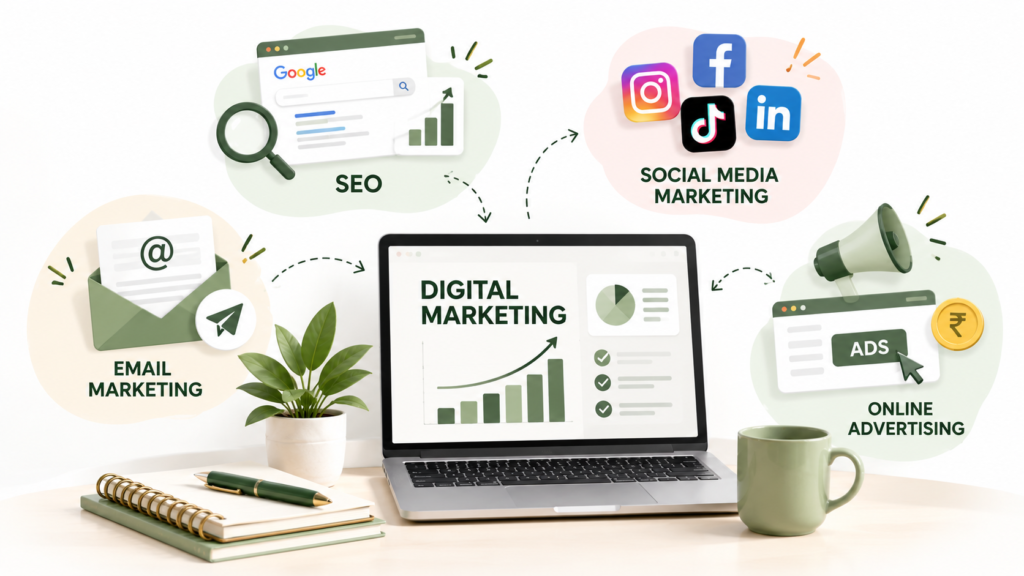
Digital marketing helps businesses promote their products and services through online channels such as search engines, websites, social media, email, and digital advertising. When planned carefully, it can help businesses improve visibility, build customer relationships, and generate enquiries.
Whether you are starting a small business, running a local shop, or working as a freelancer, this beginner-friendly guide will help you understand digital marketing, explore its different types, and discover practical ways to grow your business online in 2026.
What Is Digital Marketing?
Digital marketing is the process of promoting products, services, or brands using digital channels and technologies to reach and engage potential customers.
Unlike traditional marketing methods, such as newspaper advertisements, printed flyers, and billboards, digital marketing uses online platforms to communicate with audiences, share information, and encourage action.
For example, imagine you own a small plant shop. You could create a website displaying your plants, publish articles about plant care, share photos on Instagram, and run Google Ads to reach people searching for indoor plants.
These activities are all examples of digital marketing.
The main goals of digital marketing include:
Increasing brand awareness.
Improving online visibility.
Reaching relevant audiences.
Generating leads and enquiries.
Increasing sales and conversions.
Building long-term customer relationships.
Digital marketing does not mean using every online platform. It means selecting the channels that best suit your business goals, target audience, and budget.
Why Is Digital Marketing Important in 2026?
Customers increasingly use online platforms to research businesses, compare options, and make purchasing decisions. A thoughtful digital marketing strategy can help businesses become easier to discover and communicate their value more effectively.
Here are some important benefits of digital marketing.
1. Reaches the Right Audience
Digital marketing allows businesses to focus on people who are more likely to be interested in their products or services.
For example, a local bakery can promote its custom cakes to customers in its service area rather than advertising to people who cannot reasonably place an order.
2. Builds Brand Awareness
Regularly publishing useful content, maintaining a professional website, and sharing relevant social media posts help people become familiar with your brand.
Over time, consistent communication can help customers recognise your business and understand what makes it different.
3. Improves Online Visibility
Search engine optimisation, helpful blog content, social media activity, and local business listings can make it easier for potential customers to discover your business online.
For example, a freelance website designer can create a useful article about website design for small businesses to answer questions from potential clients.
4. Generates Leads and Enquiries
Digital marketing can encourage interested people to contact your business through website forms, email, phone calls, or messaging platforms.
A clear call to action, such as “Request a Quote” or “Book a Consultation,” helps visitors understand what to do next.
5. Helps Measure Performance
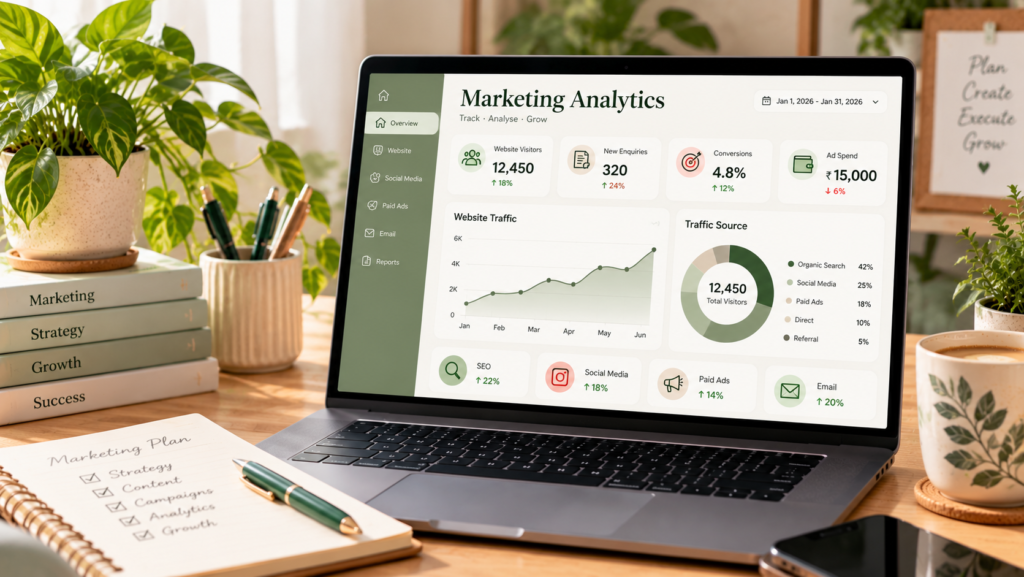
Digital marketing tools allow you to monitor useful metrics such as website visits, clicks, enquiries, conversions, and advertising costs.
This information helps you understand which activities are performing well and where improvements may be needed.
6. Supports Small Business Competitiveness
Small businesses do not always have the budgets of large companies. However, they can use focused content, local SEO, and carefully selected marketing channels to reach relevant audiences.
Results depend on competition, strategy, budget, and execution, but businesses can start small and improve their approach over time.
7. Strengthens Customer Relationships
Email newsletters, social media conversations, helpful articles, and timely responses allow businesses to stay connected with customers beyond the initial purchase.
The result can be a more useful and consistent customer experience.
What Are the Main Types of Digital Marketing?
There are several types of digital marketing, and each serves a different purpose. Understanding them will help you choose the most appropriate methods for your business.
1. Search Engine Optimisation (SEO)
Search Engine Optimisation (SEO) is the process of improving a website so that its pages can be discovered more easily through relevant search results.
SEO focuses on attracting visitors who are searching for information, products, or services related to your business.
Important SEO activities include:
Keyword research: Understanding what your target audience searches for.
On-page SEO: Improving headings, page titles, content, and image alt text.
Technical SEO: Helping search engines access, crawl, and understand your website.
Local SEO: Improving visibility for relevant location-based searches.
Example: A bakery in Bengaluru could publish a helpful page about custom birthday cakes in its service area to reach people looking for those products.
SEO can support long-term visibility, but improvements usually require ongoing work and are not guaranteed to produce immediate rankings.
2. Social Media Marketing (SMM)
Social media marketing uses platforms such as Instagram, Facebook, LinkedIn, and YouTube to share content, build brand awareness, and engage with potential customers.
It can involve organic content, community management, influencer collaborations, and paid promotions.
Example: A handmade jewellery business can post product photographs, share styling videos, answer customer questions, and direct interested visitors to its website.
The key is to choose platforms that suit your audience and create content that provides value rather than simply promoting products in every post.
3. Search Engine Marketing and Pay-Per-Click Advertising (SEM/PPC)
Paid search advertising allows businesses to display advertisements to people searching for relevant products or services.
With pay-per-click (PPC) advertising, advertisers generally pay when someone clicks their ad. Google Ads is one commonly used platform.
For example, a website designer might run a campaign targeting people searching for website design services in a specific location.
SEO vs. paid search advertising: SEO focuses on earning visibility in organic search results, while paid search advertising uses a budget to place ads in eligible advertising positions. Both can support a digital marketing strategy, but they have different costs, timelines, and requirements.
4. Content Marketing
Content marketing involves creating and sharing useful, relevant content to attract and educate a target audience.
Common formats include blog articles, guides, infographics, checklists, case studies, and downloadable resources.
Example: A fitness coach could publish an article about creating a beginner-friendly workout routine and use it to introduce relevant coaching services.
Good content answers real questions, demonstrates knowledge, and helps potential customers make informed decisions.
5. Email Marketing
Email marketing allows businesses to communicate with people who have chosen to receive their emails.
Businesses use email to share newsletters, product updates, useful tips, special offers, and follow-up messages.
Example: An online plant shop could send subscribers a monthly newsletter with plant-care tips and seasonal product recommendations.
Keep messages relevant, obtain appropriate consent, and provide a clear way for recipients to unsubscribe.
6. Website Design and Development
A business website acts as a central online destination where people can learn about your brand, explore your services, and contact you.
Professional website design focuses on usability, visual presentation, navigation, mobile responsiveness, and clear calls to action.
Example: A freelance digital marketer can use a website to display service descriptions, publish SEO articles, showcase a portfolio, and receive enquiries through a contact form.
A website does not automatically attract customers. It works best when supported by useful content, relevant traffic, and a clear customer journey.
7. Influencer Marketing
Influencer marketing involves collaborating with content creators who have an audience relevant to your business.
Depending on the creator and campaign, collaborations may include product reviews, demonstrations, tutorials, or sponsored posts.
Example: A skincare business could collaborate with a beauty creator to demonstrate how its products are used.
Choose creators based on audience relevance, credibility, engagement quality, and campaign goals. Sponsored collaborations should be disclosed appropriately.
8. Video Marketing
Video marketing uses video content to educate audiences, demonstrate products, tell brand stories, and explain services.
Businesses can publish short videos, tutorials, product demonstrations, customer stories, and longer educational videos.
Example: A website designer could create a short video showing five common website mistakes small businesses should avoid.
Videos can be shared on social media, embedded in blog articles, or published on a website to help people understand a product or service.
How Does Digital Marketing Work?
Digital marketing works best when different activities support a shared business goal. You do not need to master every channel at once. Start with a clear plan and improve it as you learn.
Step 1: Identify your target audience
Understand who your customers are, what they need, and what problems your business can solve.
Step 2: Set clear goals
Decide whether you want to increase brand awareness, attract website visitors, generate enquiries, or increase sales.
Step 3: Choose suitable channels
Select the platforms and marketing methods that fit your audience, objectives, and budget.
Step 4: Create useful content
Prepare relevant website pages, blog posts, videos, social media content, or advertisements.
Step 5: Encourage action
Make it easy for interested visitors to enquire, subscribe, book an appointment, or buy a product.
Step 6: Measure and improve
Review performance data, identify what works, and adjust your strategy.
A simple example: A handmade products business
Imagine you sell handmade candles from home.
You create a website with product photographs, prices, and an enquiry or purchase option.
You publish blog articles about candle care and choosing fragrances.
You share product videos and customer-approved reviews on social media.
You use relevant SEO techniques to help potential customers discover your website.
You consider paid advertising once you have a clear offer and a suitable landing page.
You review visits, enquiries, and sales to understand which activities are useful.
This is how different digital marketing channels can work together to support one business goal.
Digital Marketing Strategies for Small Businesses
Small businesses do not need a complicated marketing plan to begin. Focus on a few practical activities that address your customers’ needs.
Build a professional website
Create a clear, mobile-friendly website that explains what you offer, who you serve, and how customers can contact you. Make important information easy to find.
Optimise your website for SEO
Research relevant search terms, organise your content with descriptive headings, and create useful pages that answer customer questions.
Publish helpful blog articles
Blogging can help you explain your expertise and answer common questions. For example, a digital marketing freelancer could write about SEO basics, website design, or social media strategies for small businesses.
Maintain relevant social media profiles
Choose platforms that match your audience and business goals. Publish consistently, respond to relevant questions, and direct people to useful pages on your website.
Improve your local presence
If your business serves customers at an eligible physical location or service area, a Google Business Profile can help people discover important business information through Google Search and Maps.
Use paid advertising carefully
Start with a clear objective, a defined audience, an appropriate budget, and a relevant landing page. Monitor enquiries and conversions rather than judging a campaign only by clicks.
Track results
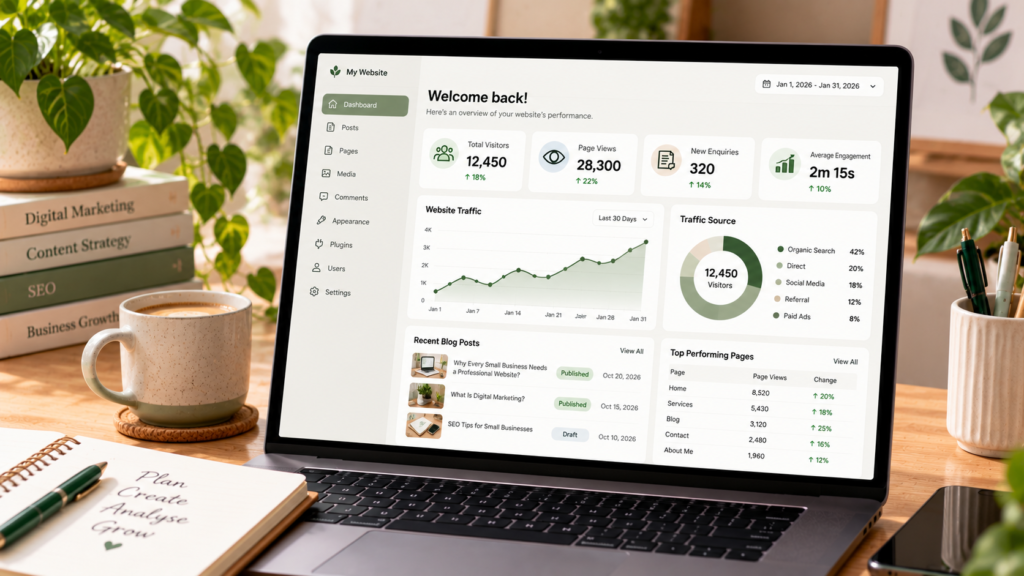
Use Google Search Console to understand how your website performs in Google Search. Use Google Analytics to analyse website visits and visitor interactions. These tools can help you make more informed decisions.
The most important principle is to choose channels based on your business needs. A local service provider may prioritise local SEO, while an online store may benefit from a combination of product pages, social content, and paid campaigns.
How to Grow Your Business Online in 2026
Digital marketing continues to evolve as search experiences, customer expectations, and online platforms change. Here are several areas worth understanding in 2026.
1. Use AI as a supporting tool
AI tools can help brainstorm content ideas, organise research, draft outlines, and explore audience questions. However, review everything before publishing. Check facts, add useful context, and ensure the final content reflects your business and your customers’ needs.
2. Create content for evolving search experiences
People are discovering information through traditional search results as well as AI-powered search experiences. Google’s current guidance continues to emphasise helpful, original content and established SEO fundamentals rather than special tricks designed only for AI search.
Focus on answering real questions clearly, demonstrating relevant experience, and keeping important website content accessible to search engines.
3. Make useful short-form videos
Short videos can demonstrate products, explain services, and answer frequently asked questions. Choose topics that are relevant to your audience instead of creating videos simply because a format is popular.
4. Personalise the customer experience responsibly
Relevant recommendations, segmented email newsletters, and tailored landing pages can make marketing more useful. Collect and use customer information transparently, with appropriate consent and privacy safeguards.
5. Build relationships beyond social media
Your website, email list, and customer relationships provide additional ways to communicate with people. Do not rely entirely on one platform whose rules and reach may change.
6. Focus on conversions, not just traffic
More visitors do not automatically mean more business. Make sure your website helps visitors find the information they need and take the next step.
For a deeper understanding of evolving search, read Google’s official guide to optimising for generative AI features in Search.
Common Digital Marketing Mistakes Beginners Should Avoid
When starting with digital marketing, avoid these common mistakes:
Starting without clear goals: Decide what success means for your business before choosing marketing activities.
Ignoring your target audience: Create content for the people you want to reach, not everyone online.
Posting without a strategy: Plan content around customer questions, business goals, and relevant topics.
Neglecting website quality: Ensure your website is mobile-friendly, easy to navigate, and simple to use.
Expecting immediate results: Organic SEO often takes time, while paid advertising can generate traffic sooner but does not guarantee sales.
Ignoring performance data: Review meaningful metrics and use the findings to improve your campaigns.
Spending on ads without a clear objective: Define your audience, budget, landing page, and desired action before launching a campaign.
Publishing unchecked AI content: Verify facts, remove generic statements, and add useful information that genuinely helps readers.
Avoiding these mistakes can help you use your time and budget more effectively.
How Can a Beginner Start Learning Digital Marketing?
If you are new to digital marketing, you do not need to learn every skill at once. Follow this simple roadmap.
1. Learn the fundamentals
Understand SEO, social media marketing, content marketing, paid advertising, and website basics.
2. Choose one area to practise
Start with a skill such as SEO or social media marketing. Learn its basic principles before moving to more advanced topics.
3. Work on a practical project
Create a sample website, write an SEO-friendly article, or develop a social media content calendar.
4. Learn useful tools
Practise with Google Search Console, Google Analytics, Google Keyword Planner, Canva, and ChatGPT.
5. Build a portfolio
Document your projects, explain your approach, and share genuine examples of your work. Do not present practice projects as paid client work.
Useful digital marketing tools for beginners
Tool | Main purpose |
|---|---|
Google Search Console | Monitor search visibility, clicks, impressions, and indexing information |
Google Analytics | Understand website traffic and visitor interactions |
Google Keyword Planner | Research keyword ideas and advertising search estimates |
Canva | Design social media posts, banners, and marketing graphics |
ChatGPT | Brainstorm ideas, create outlines, and assist with content planning |
Start with free tools where available. Learn what each tool does and how its information can support your marketing decisions.
How My Digital Marketing Services Can Help Your Business
Understanding digital marketing is the first step. Applying the right strategies consistently is what helps you work towards your business goals.
Through my freelance digital marketing services, I aim to help businesses build a stronger online presence and connect with their target audience.
My services include:
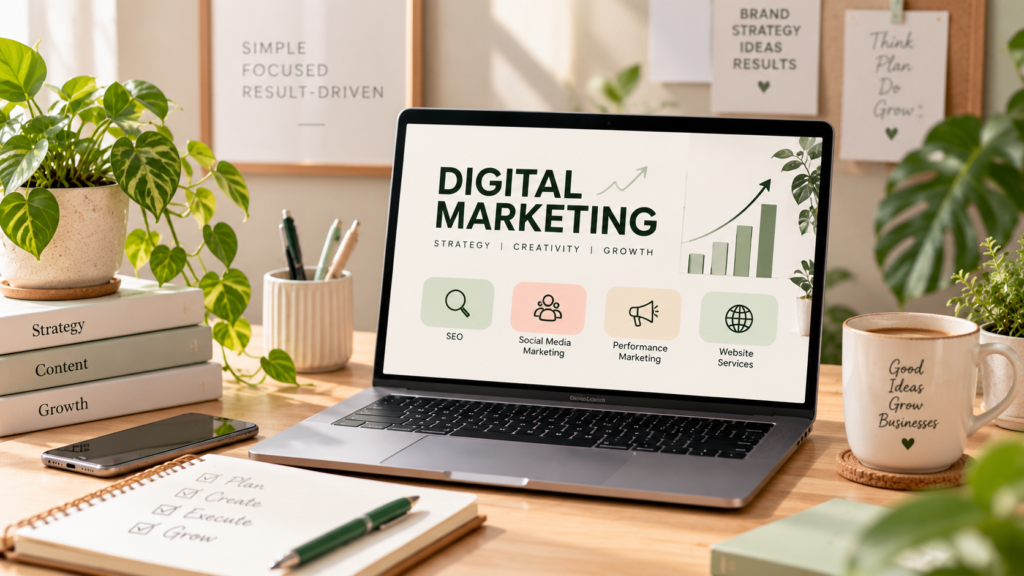
SEO Services
Improve website content, keyword targeting, and on-page SEO to support organic search visibility.
Social Media Marketing
Plan relevant content to strengthen brand awareness, encourage engagement, and connect with potential customers.
Performance Marketing
Plan and evaluate paid campaigns around clear objectives, relevant audiences, and measurable outcomes.
Website Services
Develop and improve a professional online presence that clearly communicates your business and makes it easy for visitors to get in touch.
Explore my digital marketing services to learn more about how I can support your online growth goals.
Conclusion: Start Growing Your Business Online in 2026
Digital marketing gives businesses different ways to connect with customers, share valuable information, improve online visibility, and generate enquiries.
Understanding what digital marketing is helps you make informed decisions about which channels to use and where to invest your time and resources.
You do not need to do everything at once. Start by understanding your audience, setting clear goals, building a professional website, and choosing a few suitable marketing methods. Measure your progress and improve your strategy as you learn.
Remember, successful digital marketing is not simply about being present on every online platform. It is about reaching the right people with the right message and making it easy for them to take the next step.
Ready to grow your business online?
Let’s build a stronger digital presence for your business. Visit anshitabailung.com to explore my freelance digital marketing services and get in touch to discuss your goals.
Frequently Asked Questions (FAQs)
1. What is digital marketing in simple words?
Digital marketing means promoting a business, product, or service through online channels such as websites, search engines, social media, email, and digital advertisements.
2. What are the seven types of digital marketing?
There is no single official list of seven types. Commonly used categories include SEO, social media marketing, paid search advertising, content marketing, email marketing, website marketing, and influencer marketing. Video marketing is another important category and can overlap with several of these channels.
3. How can beginners learn digital marketing?
Beginners can learn through structured courses, tutorials, practical projects, and free tools. Starting with one skill, practising on a website or sample project, and measuring results can help build practical experience.
4. Is digital marketing suitable for small businesses?
Yes. Digital marketing can help small businesses reach relevant audiences, promote their services, improve discoverability, and generate enquiries. The best approach depends on the business’s goals, budget, audience, and competition.
5. How long does digital marketing take to show results?
The timeline depends on the channel and objective. Paid advertising may generate visits soon after a campaign launches, while SEO often takes several months to show meaningful progress. Neither guarantees enquiries or sales.